In the realm of server rack infrastructure, the cage nut stands out as a pivotal innovation that has significantly influenced equipment mounting solutions. Patented on February 3, 1953, by William A. Bedford, Jr. (U.S. Patent 2,627,294), the cage nut introduced a versatile and reliable method for securing components within racks, addressing challenges associated with mounting in thin or hard-to-reach materials.
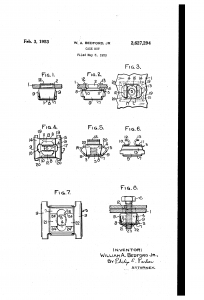
A cage nut, also known as a captive or clip nut, comprises a square nut encased within a spring steel cage. This design allows the nut to “float” slightly, accommodating minor misalignments during installation. The cage features two wings that, when compressed, enable insertion into square holes commonly found in server rack mounting rails. Upon release, the wings expand, securing the nut in place.
Versatility: Suitable for mounting equipment in racks where pre-threaded holes are absent.
Ease of Replacement: If threads become stripped, the cage nut can be easily replaced without altering the rack structure.
Material Compatibility: Ideal for use with materials too thin or soft to be tapped for threading.
Reduced Cross-Threading: The floating nature of the nut minimizes the risk of cross-threading during installation.
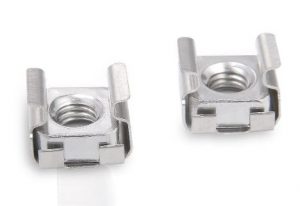
Cage nuts are available in various sizes and profiles to accommodate different equipment and rack specifications:
Standard Cage Nuts: Commonly used in general applications, compatible with standard M6, 10-32, or 12-24 screws
Low-Profile Cage Nuts: Designed for installations where space is limited, offering a smaller footprint without compromising strength.
The choice between these variants depends on the specific requirements of the equipment and the rack configuration.
Installing cage nuts requires aligning the cage with the square hole in the rack rail, compressing the wings, and inserting the assembly until it snaps into place. While installation can be performed manually, using specialized tools can facilitate the process and reduce the risk of injury or damage to the cage nut.
Beyond server racks, cage nuts are utilized in various sectors
Telecommunications: Securing equipment in network cabinets.
Automotive: Mounting components where access is limited.
Aerospace: Providing reliable fastening solutions in aircraft assemblies.
Industrial Machinery: Facilitating equipment mounting in manufacturing environments.
Their adaptability and reliability make cage nuts a preferred choice for engineers and technicians across these industries.
The invention of the cage nut by William A. Bedford, Jr. has had a lasting impact on equipment mounting solutions, particularly in the context of 19-inch server racks. Its design addresses critical challenges in installation and maintenance, offering a combination of strength, flexibility, and ease of use. As server rack configurations continue to evolve, the cage nut remains an essential component, underscoring its significance in the field of rack engineering.
For more insights into server rack components and accessories, visit www.19inchracks.co.uk.
19-inch Racks – market drivers for Growth ?
